August 4, 2026

Carson Cook, CEO
/
Traditional secured lending is embracing digital assets. The question is who maintains the operating record when lenders, borrowers, custodians, and settlement systems all need to rely on the same transaction state.
The neutral operational layer problem
Digital assets are increasingly being evaluated inside secured lending frameworks that traditional finance already understands. A Bitcoin-backed loan is still a secured loan, so the lender needs to know who owns the collateral, who controls it, how the collateral is valued and what happens if the borrower doesn’t cure a margin call. Those questions are familiar to credit, legal, risk, operations, and audit teams. Digital assets change operating requirements because the collateral trades 24/7 and moves across wallets and custodians. So while the discipline of secured lending remains familiar, the infrastructure supporting that discipline has to operate differently.
As digital assets move into traditional finance, the market will need an operating record that connects collateral control, margining, servicing, netting, settlement instructions, reporting, and audit. The record can’t be separated from the institution that maintains it or the architecture that governs it and every participant in the transaction has to trust both.
Institutions can build internal systems, but this doesn’t solve the main problem. A lender’s system, a borrower’s treasury record, and a custodian’s portal may each work well on their own, but the market doesn’t scale if the shared state of the transaction has to be reconstructed through email, exports, and spreadsheets. Walled gardens improve only one firm’s workflow, but they don’t create the neutral operating layer that allows a market to scale.

Financial markets scale when transaction records can move across institutional boundaries. Walled gardens help firms manage themselves, but shared markets need infrastructure that counterparties can rely on.
Digital assets are becoming part of secured lending
For much of the last decade, digital asset markets were discussed as a financial system apart from traditional markets. That framing made sense when the active market was mostly crypto-native lenders with their own operating conventions. It’s less useful now that banks, credit funds, broker-dealers, treasury teams, and institutional lenders are asking how digital assets fit into their existing secured lending and collateral management frameworks.
Bank credit officers don’t need a digital asset thesis to understand a Bitcoin-backed loan. They need to understand how the transaction structure maps to account control, pledged collateral, margin monitoring, liquidation rights, custodian reporting, and first-priority security interests. The asset may be new to the institution, but the underlying credit questions have not changed.
In a traditional secured financing, the borrower pledges collateral and the lender receives rights against that collateral. The collateral sits inside a control framework, the lender applies a haircut, the position is monitored against agreed terms and the lender has remedies if the borrower fails to cure. Digital asset collateral has to translate into that same operating language before most regulated institutions will treat it as usable collateral. In traditional lending, control agreements such as deposit account control agreements (DACAs) and securities account control agreements (SACAs) help define who can direct collateral and under what conditions. In digital asset credit, the equivalent question becomes how a pledged wallet or custodied account is controlled, restricted, monitored, and enforced.
The translation is where the work is because traditional finance won’t lower its standards for a new collateral type. If digital asset collateral can’t be controlled, valued, margined, serviced, reported on, and audited in terms those teams understand, it won’t be used by most secured credit businesses.
The workflow doesn’t carry over exactly
Much of the institutional conversation around digital assets has revolved around custody. That was necessary because a regulated lender won’t lend against collateral if the asset can’t be safely held, segregated, restricted, reported on, and protected from unauthorized movement. The custody layer is foundational, and the market has made real progress in institutional key management, segregated wallets, approval controls, and reporting.
But custody alone doesn’t carry the full credit workflow. A custodian may know where the asset sits, but the lender still needs to know whether that asset is pledged, whether the borrower can move it, whether the current value satisfies the agreed haircut, whether the LTV has breached, whether a margin call has been issued, whether a cure period has started, and whether the full sequence can be reconstructed afterward. A vault, wallet, or custody portal can be essential infrastructure without becoming the operating record for the credit relationship.
I heard that gap recently in a conversation with an executive at a regional bank. The bank can lend against Bitcoin using a triparty agreement with a qualified custodian, but they’re struggling to design a scalable lending workflow without stitching together credit, legal, custody, collateral, and servicing processes that weren’t designed to stay synchronized. That problem becomes more difficult because digital asset collateral keeps moving. Traditional markets close and many secured lending workflows still rely on end-of-day marks, overnight batch files, daily reconciliations, and escalation windows that fit the market’s clock. Digital assets operate 24/7. A position that looked properly margined on Friday can require action before Monday morning.
That doesn’t make digital assets unsuitable collateral, as volatile collateral can be financed if the haircut, control framework, and monitoring regime are appropriate for the asset. However, if the collateral view is stale, the custodian feed updates only every few hours, or the margin workflow depends on someone reconciling records across systems, the lender doesn’t have institutional-grade control over the position.
This is where the workflow becomes more important than the asset itself. The parties need to approve counterparties, document terms, control collateral, monitor exposure, issue notices, manage cures, net obligations, instruct settlement, and record confirmations. None of those functions is exotic to traditional finance, but they become harder when they have to operate across custodians, wallets, price feeds, internal systems, legal agreements, and settlement rails that were not built to operate from the same transaction view.
Settlement follows the credit workflow
Blockchain settlement is useful, but immediate settlement is not the whole operating model for institutional credit. A blockchain can move assets, record transfers, provide settlement finality, and create a transaction-level audit trail that traditional rails don’t always replicate. Those capabilities matter, and they are part of why traditional finance is paying attention to digital assets as collateral and settlement instruments.
The credit relationship contains information that institutions don’t want exposed publicly. Borrower identity, lender identity, loan size, pricing, haircut, margin threshold, cure period, collateral schedule, default triggers, substitution rights, liquidation rights, and internal approvals all belong inside a controlled operating environment. A public settlement record can provide evidence that movement occurred, but it can’t carry the full private state of the credit relationship. In addition, institutions often want to net obligations before final movement because it reduces the number of settlement transactions and can lower execution costs, including blockchain network processing fees, commonly referred to as “gas fees.” Banks also want timing control, approvals, exception handling, and a clear settlement instruction that follows the agreed workflow.
In institutional credit, settlement results from a controlled process. The parties agree to terms, monitor exposure, apply netting, handle approvals, resolve exceptions, and then send settlement instructions through the appropriate execution path. That path may be an on-chain transfer, a custodian movement, a fiat rail, or a wallet transfer. The execution rail moves the asset or cash, while the operating layer maintains the credit state that produced the instruction.
That is where the ownership question comes in. A neutral operator can have settlement orchestration and even settlement software without becoming the blockchain, the custodian, or the bank payment system underneath it. The operator can calculate obligations, manage approvals, net exposures, generate settlement instructions, route them to the appropriate execution rail, and record confirmations when settlement is complete. What matters is that the operator doesn’t take a side in the underlying credit relationship.
The infrastructure the market needs is therefore closer to a private operating layer than a public settlement venue. It has to maintain the credit record, preserve privacy, support netting, and connect to execution rails when the parties decide to settle.
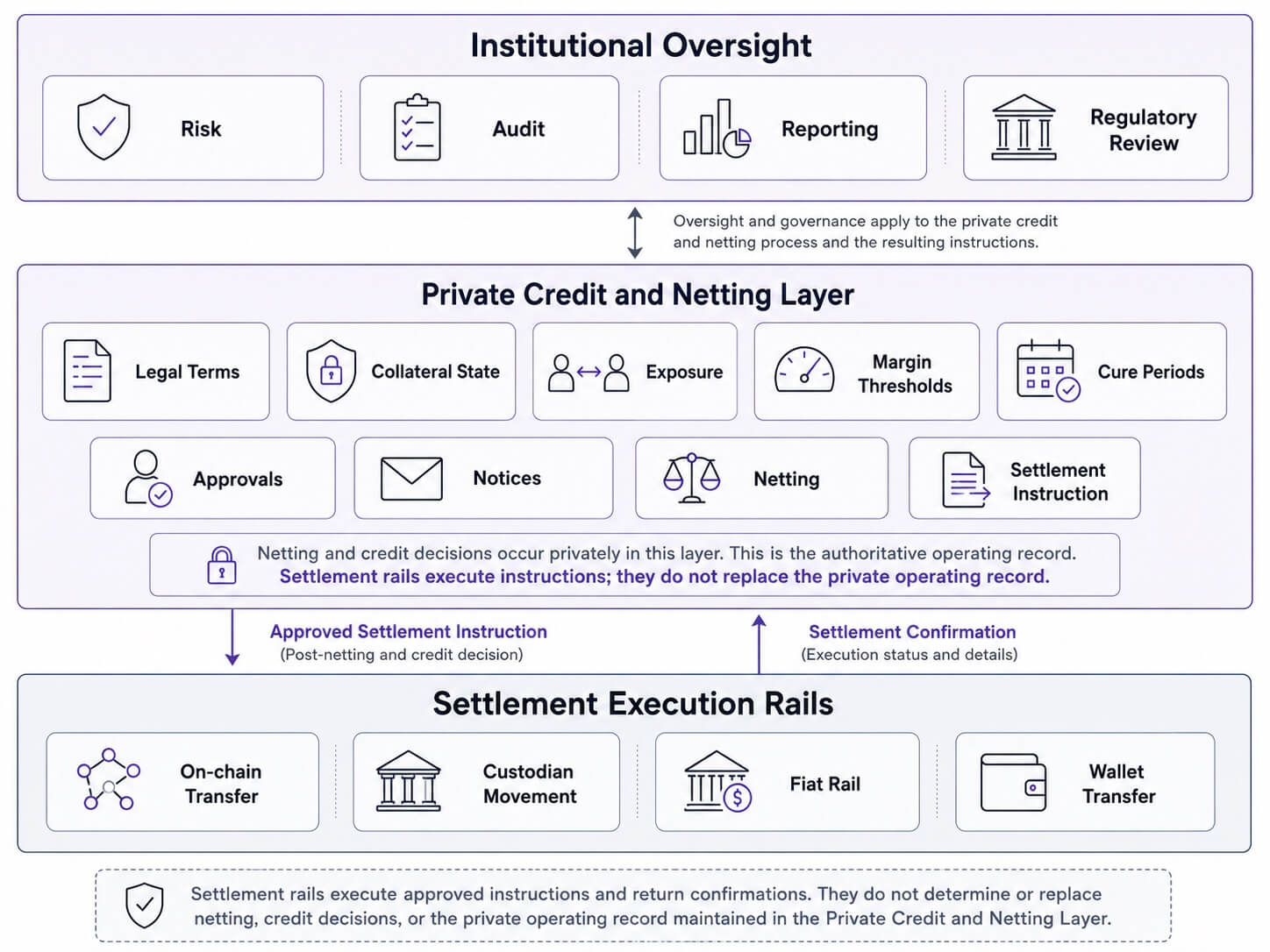
Figure 1: Settlement follows the credit workflow
In-house builds solve the first problem
In a fragmented market, the first instinct is usually to build something internal and bolt it onto the legacy stack. That’s a reasonable response when the external environment is immature and each institution needs to protect its own workflow. A lender builds its own loan system, a borrower keeps its own treasury record, a custodian provides a portal, and somewhere in the middle, a spreadsheet ties the pieces together.
At low volumes, this can work better than people expect. Internal systems are easier to govern than shared systems because one institution can decide what fields matter. That’s why in-house builds are often the first phase of market development. They solve immediate operational challenges, and they solve them faster than waiting for a standard to emerge, but limitations appear at the boundary between firms. A secured loan is a relationship between a lender, a borrower, a custodian, sometimes an agent, and eventually an auditor or regulator who needs to understand what happened. Each party can maintain its own version of the transaction, but complexity builds quickly when the shared state exists only as parallel records interpreted after the fact.
That was the core point of my earlier article, “Good Fences Make Good Neighbors. They Make Terrrible Markets”. Institutions can build sophisticated internal infrastructure and still fail to solve the boundary problem because their counterparty built something different, resulting in formats that don’t align, the state models that don’t correspond and the operational record still moves through email, chat, portal exports, and spreadsheets.
The same pattern has appeared before in financial infrastructure. The 1968-69 paperwork crisis was not only a story about the burden of managing physical certificates, but also about the failure of bilateral operating records to keep pace with market activity. Similarly, SWIFT addressed a related issue in cross-border bank messaging, where banks needed standardized rails but didn’t want to depend on infrastructure controlled by a single competitor. The details are different in digital asset credit, but the coordination problem is the same.
A common transaction view gives the market a way to move from parallel internal records toward a reliable view of the credit lifecycle. It has to know what was agreed, what was pledged, what is controlled, what is valued, what breached, what notice was sent, what was netted, what settlement instruction was generated, what action was taken, and what evidence exists.
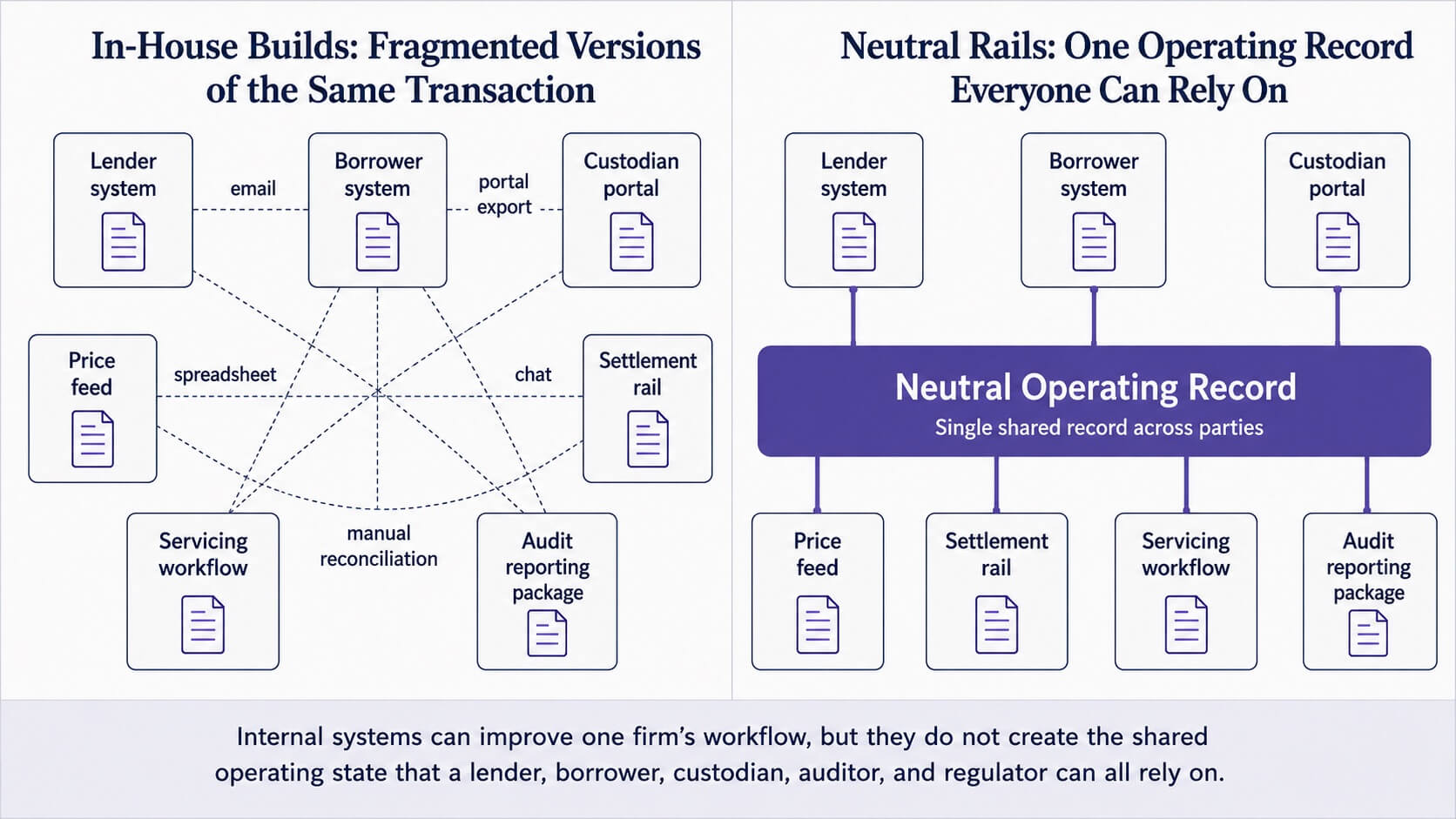
Figure 2: Why in-house builds cannot solve the boundary problem
The ownership problem
The party responsible for the credit record shouldn’t also be a market participant. The firms with the strongest incentive to build the layer often have the clearest conflicts once other participants are asked to rely on it. A custodian-owned rail may work well within that custodian’s environment, but the market will hesitate to let a single custody provider define the operating record across the full credit lifecycle. An exchange or trading venue has the same problem from a different angle. It’s commercially involved in the activity the record is supposed to govern, and as that record becomes more important, its ownership structure becomes harder for the rest of the market to ignore.
Neutrality doesn’t mean the operator is passive. In most financial infrastructure, the coordinating layer still has to sit close enough to the workflow to be useful. It has to understand the transaction lifecycle, the collateral state, the approvals, the exceptions, and the settlement instructions that result from the process. The important point is not that the operator is distant from the workflow – it’s that it doesn’t have a commercial position in the transaction it’s coordinating. That’s the difference the market will soon care about. The right operating layer can be deep in the workflow without being commercially conflicted.
The standard is still being formed
Markets often wait too long to build shared infrastructure. They tolerate bilateral workarounds until a failure, scandal, or operational bottleneck makes the cost visible to everyone. In hindsight, the need for shared infrastructure often seems obvious. But each participant has a reason to keep using the system they have already built — it reflects their own workflows, controls, risk policies, and client relationships.
Digital asset credit hasn’t had its forcing event yet, and that should be treated as an opportunity rather than a comfort. Banks are still deciding how digital asset collateral fits inside secured lending programs. Custodial models are still developing. Institutional lenders are still testing structures. Regulators are still forming their expectations. Once a market standard forms, it becomes difficult to change.
That’s why the ownership question matters now. The firms whose workflows are reflected in the standard will help define how the market operates. The firms outside the room will spend years reconciling against decisions they didn’t help make. Digital assets are already becoming collateral. The unresolved question is whether the market builds shared infrastructure before it needs that infrastructure to contain a failure.
The bottom line
Walled gardens can help an institution manage its own workflow. They don’t help a market scale when the transaction depends on a shared collateral state across lenders, borrowers, custodians, auditors, and regulators. As traditional secured lending embraces digital assets, the market will need more than custody, trading venues, execution rails, and internal loan systems. It will need an operating record that connects collateral control, margining, servicing, netting, settlement orchestration, reporting, and audit across the firms involved in the transaction. That record can’t be owned by a lender, borrower, custodian, exchange, or trading venue without limiting adoption, because the record has to be trusted by every participant whose obligations run through it.
As digital asset credit infrastructure evolves, the challenge will not simply be coordinating information across institutions. It will be coordinating information while allowing each participant to retain control of sensitive positions, counterparties, collateral holdings, and credit terms.
Traditional finance has seen this kind of infrastructure problem before. The details are different, but the coordination issue is still familiar. The next stage of digital asset credit will depend on who maintains that record, how close it sits to the workflow, and whether the market trusts the operator not to take a side.
Carson Cook, PhD
Carson is CEO and Founder of Membrane Labs, which builds counterparty-neutral infrastructure for institutional digital asset credit, collateral, and settlement. He holds a doctorate in nuclear physics and previously worked at McKinsey and Company. He is the named inventor on two issued U.S. patents covering coordinated digital asset settlement. Membrane Labs is headquartered in Miami, Florida.